Jatiya Sangsad Bhaban or National Parliament House, is the house of the Parliament of Bangladesh,
located at Sher-e-Bangla Nagar in the Bangladeshi capital of Dhaka.
Online-based domestic tourism start-up Go Zayaan has recently received an investment of $26 lakh, approximately Tk22 crore.
The investment is led by Wavemaker Partners, one of the largest technology companies in Southeast Asia. The other investors are 1982 Ventures, Iterative and Century Oak Capital.
In the past, Brac Osiris Impact Ventures and OS Ventures invested here.
This new investment will be used to bring all the benefits related to technological development, human resources and travel under the online service.
Go Zayaan Founder Ridwan Hafeez said, “As a result of the information technology revolution in the country, people are getting used to using the Internet. We are working to upgrade the country’s tourism sector by using technology and to make Bangladesh a popular tourist destination in the world.”
Bangladesh’s tourism sector is growing very fast, but only 5% of business operation is done online. Go Zayaan is working to make travel more comfortable by bringing all the hotel and travel-related facilities online.
Bangladesh is the proud host of the 25th World Congress on Information Technology (WCIT) 2021
We are delighted that Bangladesh is the proud host of the 25th World Congress on Information Technology (WCIT) 2021, one of the most important and prestigious ICT events in the world in Dhaka, Bangladesh from November 11-14, 2021.
The Remarkable Story of Bangladesh’s Development Journey
Bangladesh is a relatively young country, having gained independence a little over 50 years ago. Despite its youth, however, the country has made exceptional strides in reducing poverty and boosting shared prosperity over the last five decades.
Sadia Afrin has her eyes squarely set on her dream job. Afrin, who lives in Bangladesh, is combining a passion for graphic design, cartoons, and information technology in the hopes of becoming a professional animator. Just one generation ago, this dream would have rested beyond the realm of possibility.
Growing up, her father was a migrant worker in Saudi Arabia and her mother was a stay-at-home parent.
“I first saw a computer and learned how to operate it at the Dhaka Mohila Polytechnic Institute,” she explains.
It was there that she first learned how cartoons could be created digitally.
“It is my dream to visit Japan one day and work in the field of animation,” she says.
Doctor Networking App Frontliners Raises New Investment
Dhaka-based Healthtech startup Frontliners Technologies announced that it has raised its first round of angel investment from prolific angel investor M Asif Rahman, founder of WPDeveloper and ARCom, and Nazmul Hasan Rupok, CEO of WPDeveloper. The details of the investment were not disclosed.
Founded in 2020 by Salman Rahman, Bashar Bhuiyan, and Md. Shafiqul Islam Khan, Frontliners is developing a peer-to-peer networking app for Doctors in Bangladesh with an ambition to be the super app for doctors providing information and digital services to doctors.
Salman Rahman, Founder and Chief Executive Officer of Frontliners said, “In a country like Bangladesh, we’ve seen throughout the pandemic that the support and resources for medical professionals are not sufficient. Unlike the metropolitan areas, most of the regions in our country do not have proper digital services for healthcare professionals. Our doctors are more than capable of solving many of the challenges we face if they get access to resources and support. So we thought, “what would happen if we could connect doctors with each other so that they could share expertise and resources?”
“Frontliners will allow connected healthcare professionals to share expertise with their peers using the Frontliners platform,” explains Md. Shafiqul Islam Khan, Chief Operating Officer of Frontliners. We are building a ONE STOP SOLUTION for the doctors where they will find all kinds of professional and academic solutions for daily life.”
Bashar Bhuiyan, Co-founder and Chief Technology Officer of Frontliners said “Our long term goal is to introduce AI-enabled solutions for both doctors and patients which will take the health sector of our country to the next level.”
M Asif Rahman said “We have seen excellent new approaches in consumer-facing healthtech, from telemedicine to scheduling. There is a gap in how doctors connect with each other and collaborate, especially Covid has shown us the gap. Frontliners is an ambitious project by a truly energetic team, we believe they have the potential to be a go-to solution for health professionals and work as a Super App to help grow from knowledge-front.“ Mr. Rahmand is a successful tech entrepreneur and prolific angel investor.
Nazmul Hasan Rupok, the other investor in the company, mentioned, “To help grow our health sector it is important that our doctors have access to the latest knowledge in the sector, where Frontliners could play a vital role. ”
The State of Startup Funding In Bangladesh till September 2021.
To date, 37+ Bangladeshi startups raised more than $120Mn in disclosed investments. Many startups raised seed and pre-seed money that has not been disclosed. The increase is significant compared to previous years. In 2020, the total funding was around $40Mn. We still have a quarter to go, so it is logical to anticipate that the final quarter of the year will be eventful.
Our Portfolio Startup Chaldal, Bangladesh’s largest grocery delivery platform, raises $10M Series C.
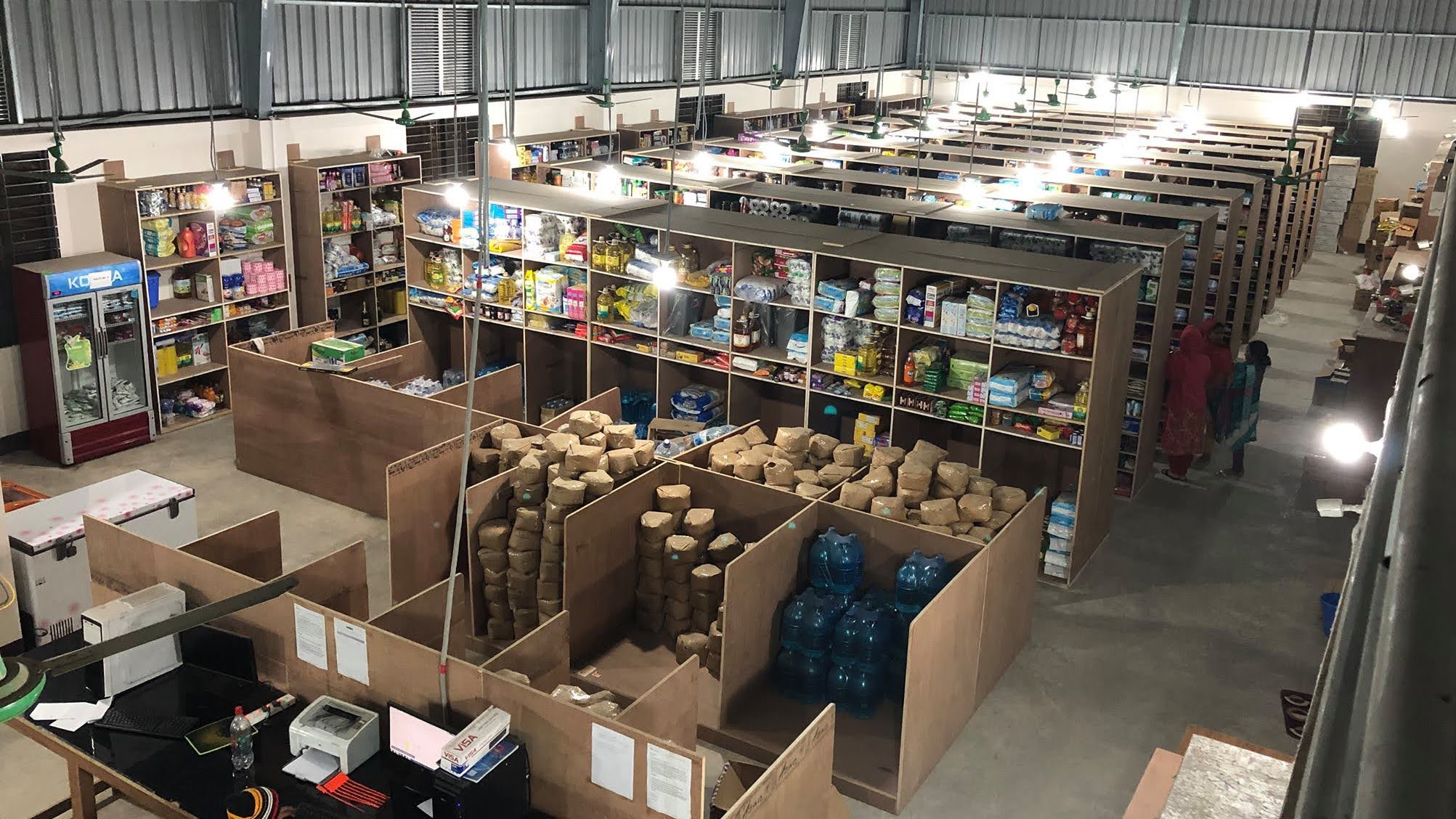
Founded in 2013, Bangladesh’s Chaldal was one of the first grocery delivery startups in the world to use the “dark” store model, picking up orders from its own warehouses instead of retail stores. Now the company says it is the country’s second-largest grocery player and the largest grocery e-commerce platform, with 27 warehouses located in four cities. Chaldal plans to expand into 15 new cities with a recently closed $10 million Series C. The round was led by Taavet Hinrikus, co-founder of Wise; Topia chief product officer Sten Tamkivi; and Xploration Capital, with participation from Mir Group.
When Chaldal launched in Dhaka eight years ago, it first picked up orders from local grocery stores. But most retailers in the city are very small and Chaldal was unable to guarantee items would be available for its customers. As a result, it decided to start building its own network of warehouses.
“When we started, Instacart was still the dominant model, but we took a different stand and said we want to deliver from our own warehouses because that leads to better inventory management,” co-founder and chief executive officer Waseem Alim told TechCrunch.
Now the company, a Y Combinator alum, has 27 warehouses located in four cities (Dhaka, Naryanganj, Chattogram and Jashore). It will expand to 15 new cities and plans to open 50 warehouses by the end of this year. In addition to its flagship grocery deliveries, Chaldal will expand GoGo Bangla, its on-demand logistics service for small e-commerce businesses, and the Chaldal Vegetable Network, which connects farmers directly to retailers. It also has plans to launch a direct-to-consumer pharmacy.
Chaldal claims that it has generated $40 million in revenue and performed 2.5 million orders over the past 12 months, growing about 120% year over year. It currently sells about 8,500 kinds of products and wants to expand that to 30,000 SKUs by December.
Alim says Chaldal’s core grocery operations have been profitable for a while now, and it only invests cash in building its technology or launching new verticals. One of the reasons it is able to make money is because Chaldal began batching deliveries early on, sending out riders from its full-time fleet with several orders at a time (it recently launched a part-time driver program). Batching also means Chaldal is able to offer deliveries in as little as 15 to 30 minutes.
Chaldal also worked closely with suppliers and manufacturers. “We are one of the most efficient online grocery retailers in the world in terms of amount of capital that has been invested in us versus our size, and that’s mainly because we have been really working with our supply chain and all those details,” Alim said.
For example, it sources produce directly from farms, and partners with large manufacturers like Unilever. “Walmart and stores like that don’t exist here; it’s mostly small retailers, so we’ve been able to have a huge impact on the supply chain side of things,” said Alim. “We are continuing to expand our microwarehouse model and have started supporting, as part of the delivery mechanism we have built, a lot of small merchants,” including many sellers who signed up for GoGo Bangla during the pandemic.
The 1st Annual General Meeting of Startup Bangladesh Limited successfully closed on September 11, 2021.
The meeting was chaired by Mr. N M Zeaul Alam, PAA, Senior Secretary & Chairman of the Company.
Mr. Moinul Kabir, Secretary, Legislative Div. Ms. Rina Parveen, Add’l Secretary, ICT Div. Mr. Shamsul Arefin, Add’l Secretary, Cabinet Div. Mr. Md. Saidur Rahman, Add’l Secretary, Finance Division and, Independent Director Mr. Arif Khan, Vice Chairman, Shanta Asset Management Ltd. were present in the meeting.
All resolutions were adopted by majority votes from the Board of the Directors.
She Loves Tech: Bangladesh top 3 Startups will be recognized.
Judge Panel for the final pitch of She Loves Tech Bangladesh 2021 Local Final Round. The honorable judges will evaluate this year’s top 10 startups on 11 September 2021. And She Loves Tech Bangladesh top 3 Startups will be recognized.
This year’s Panel includes
Nirjhor Rahman, CEO of Bangladesh Angels Network
Sylvana Quader Sinha, Founder, Managing Director, and CEO of PRAAVA Health
Salsabeel Khan, Investment Associate, Anchorless Bangladesh
Shamma Raghib, Head of Sales and Partnership Strategy, Alice Lab
Join the exclusive virtual event and witness the most potential women and technology-based startups compete to represent Bangladesh in the Global Platform!!
Commerce platform ShopUp raises $75 million led by Valar in Bangladesh’s largest funding
Peter Thiel’s Valar Ventures led ShopUp’s $75 million Series B round. Prosus Ventures as well as existing investors Flourish Ventures, Sequoia Capital India, and VEON Ventures also invested in the round. The new investment, which brings the startup’s all-time raise to over $100 million, is also Valar’s and Prosus’ first deals in Bangladesh, home to over 100 million internet users.
Like its neighboring nation, India, more than 95% of all retail in Bangladesh goes through neighborhood stores. There are about 4.5 million such mom-and-pop stores in the country and the vast majority of them have no digital presence.
As is the case in India, Pakistan and several other Asian countries, these small shops face a number of challenges in Bangladesh. They don’t have access to a large catalog for inventory selection and they can’t negotiate good pricing and faster delivery. And for these small retailers, more than two-thirds of all their sales are still processed on credit instead of cash or digital payments, creating a massive liquidity crunch.
ShopUp is attempting to address these challenges. It has built what it calls a full-stack business-to-business commerce platform. The startup provides a number of core services to these stores including a wholesale marketplace to secure inventory, logistics (including last-mile delivery to customers) and working capital. (Like many startups in India, ShopUp has banking and other partners to provide working capital.)
In the past year, the startup has expanded its offerings and deepened its footprints within Bangladesh, said Afeef Zaman, co-founder and chief executive of ShopUp, in an interview with TechCrunch. For instance, it has partnered with country’s largest manufacturers, producers and distributors to secure and supply inventories to small shops, he said. And its logistics offerings is already the largest in Bangladesh.
The startup, like several others, was hit by the pandemic, but as the country begins to open up, ShopUp is beginning to see recovery, he said. Overall, business has grown over 13 times in the last one year, he said.
“The leadership team at ShopUp has shown strong execution capabilities over the last twelve months. They became clear market leaders with double digit growth across three products built for the underserved small businesses in Bangladesh. In fast-growing frontier economies like Bangladesh, small businesses are the primary driver of the economy. We are excited to partner with Afeef’s vision of building a connected ecosystem of products to fast-track their transition to the online economy,” said James Fitzgerald, founding partner of Valar Ventures, in a statement.
Zaman said the past one year has accelerated the adoption of technology among these small shops in Bangladesh. “They are using several internet-based services now. Not just ShopUp, but also messaging, and virtual payments,” he said. “We expect this to continue going forward.”
The Dhaka-headquartered startup, which has an office in Bangalore, where the large portion of its tech and engineering talent is based, plans to deploy the fresh funds in part to expand its team. As part of the new round, Zaman said the startup has expanded its employee stock option pool by three times.
“This investment marks our entry into Bangladesh – among the fastest-growing economies in the past decade. ShopUp has demonstrated strong execution focus in solving for a cross-section of needs for small businesses in a fragmented market. We are thrilled to support their efforts to empower millions of retailers and enable them to participate in the country’s economic growth,” said Ashutosh Sharma, Head of Investments for India at Prosus Ventures, in a statement.
The Dhaka-based edtech company harnesses technology to make learning more accessible, affordable, and fun.
When it comes to primary education, Bangladesh has made remarkable strides. Progress on universal access, enrolment rates, gender equity, and high competition levels have made it a success story among its peers in the developing world.
Yet that success has not quite translated into secondary and higher education. In urban cities, most students traditionally rely on pricey after-school coaching centres or private tutors to help them with test preparation and further study assistance.
That’s where Bangladeshi startup Shikho steps in, harnessing the power of technology to democratise education and make it more affordable and fun.
“We want to be a Spotify for learning,” declares Shahir Chowdhury, Shikho’s co-founder and CEO.
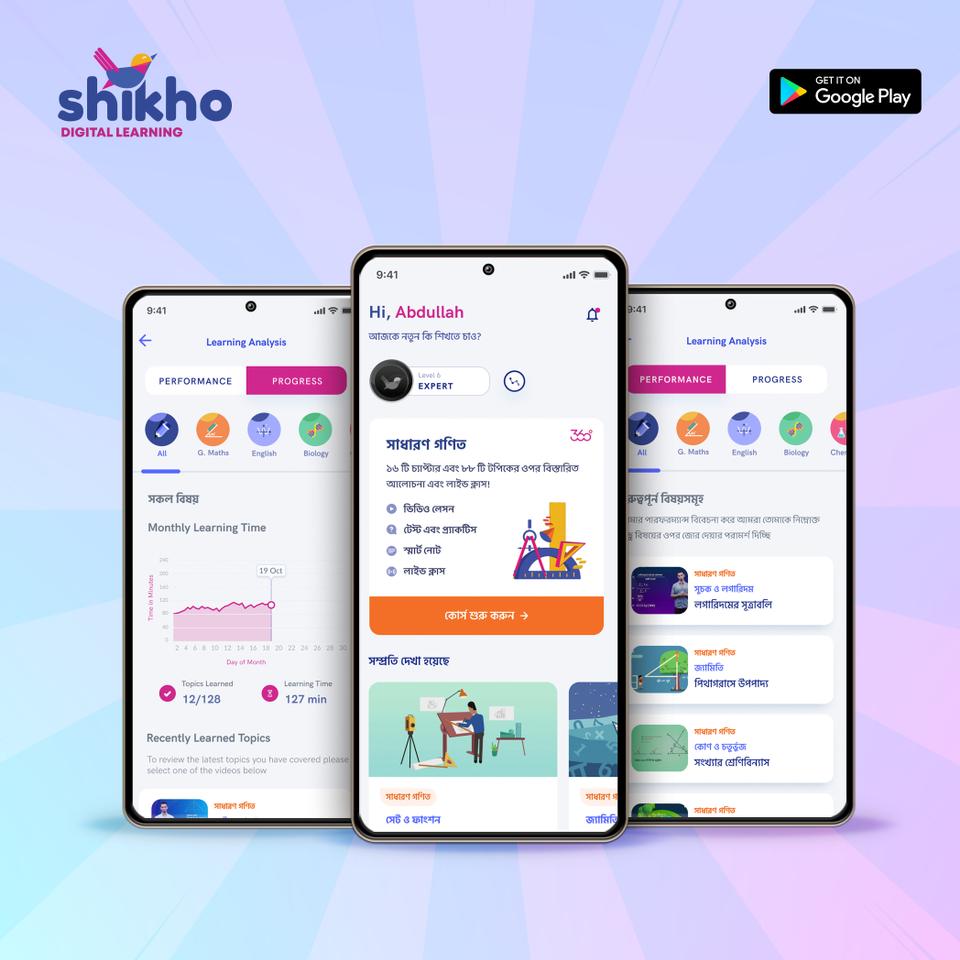
Now approaching 100,000 downloads on Google Play Store, users can sign up to the Shikho app to receive video lessons that use high-quality animation that enhances their learning experience through exciting gamification techniques.
Thanks to extensive smartphone penetration in Bangladesh, its coverage has spread across the country, with users from the remote Sundarbans delta on the app.
This kind of accessibility coupled with a revolutionary digital learning formula is what Shikho hopes will eventually lead to mass adoption.
For Chowdhury, it forms the basis of Shikho’s value proposition. “We wanted to produce videos that are high quality and structured on-demand so you can access them anytime through the convenience of a mobile phone,” he tells TRT World.
Shikho’s video lessons use high quality animation to enhance the learning experience and help explain complex concepts visually by placing the student in real life settings. (Shikho)
And the company’s vision has been compelling enough to catch the attention of global and regional investors.
At the end of July, Shikho closed a $1.3 million seed funding round, backed by prominent Silicon Valley-based edtech investor Learn Capital, and Anchorless Bangladesh, a New York-based fund focused on startups in the country. Early-stage venture capital firm Wavemaker Partners and CEO Ankur Nagpal of online course platform Teachable rounded out the sponsoring quartet.
Genesis
Before Shikho’s launch in April 2019, Chowdhury and co-founder/COO Zeeshan Zakaria – who both grew up in Dhaka – had been bootstrapping the project over the years while working in the financial services industry in London.
But the UK was only meant to be a stopgap and before long, Bangladesh beckoned. “I wanted to go back and launch a socially impactful business using technology,” Chowdhury says.
With a career in finance, he naturally gravitated towards fintech. But there were already a handful of players specialising in financial inclusion back home led by bKash, a popular mobile services solution backed by Chinese tech giant Ali Baba.
Instilled with a life-long interest in learning, education appeared the logical next option; Chowdhury’s father was a retired professor and his mother a teacher. Coming across a research report in 2018 that detailed the rise of Chinese and Indian edtech startups like Toppr and Byju motivated him to dig deeper and finally enter the space.
Initially, he observed comparable market dynamics between Bangladesh and India – the cultural importance imbued upon education, not to mention its impact on social mobility.
However, there was one big difference. “Risk capital has been sparse in Bangladesh, and never enough to support long-term edtech projects,” he says.
Venture capital funding in India is more mature compared to its eastern neighbour, evidenced in a per capita spending disparity of $49 to $0.70. By 2020, India had pulled in a total of $2.9 billion in edtech funding, while Bangladeshi firms historically had raised a meagre $1.2 million combined (excluding Shikho’s latest round).
While investment was a missing ingredient that prevented long-term projects from taking root, Chowdhury turned to what market opportunities could be tapped into.
Last year, Bangladesh surpassed India in terms of GDP per capita and its economy has experienced at least six percent growth since 2009. With it has come a growing middle class with disposable income willing to spend more on their children’s education.
There was also a population dividend. “Out of 165 million people, half of that is under 25 and effectively learning in some shape or form,” Chowdhury says. He was confident demand for an education product existed, only there was no infrastructural capability to upskill enough teachers to meet it.
Shikho’s founders, CEO Shahir Chowdhury, left, and COO Zeeshan Zakaria. The two friends launched the company in 2019 after working in the financial services in the UK. (Shikho)
How Shikho works
The goal at first was to come up with an engaging way to teach students the syllabus from the Bangladesh National Curriculum. The idea was to incorporate lessons into an on-demand video experience that would deliver a new way of learning.
“We realised our pedagogical style needed to be more visual, which the traditional learning experience lacked,” Chowdhury explains. “You can visualise examples in a real-life context that helps kids retain information long-term. That’s the conceptual underpinning for what we’re building.”
Since rolling out the pilot app in November 2020, the company offers a mathematics course for grades 9-10, containing more than 120 video lectures, 4,000 mock questions with solutions, and over 1,000 diagrams.
Following the pilot, Shikho plans to launch more courses and subjects like biology, chemistry and physics and expand to grades 9-12.
Each video course is seventeen chapters, which are broken into five-minute-long lessons. Digital resources called “smart notes” are supplemented with each video lesson.
Retaining attention spans was a crucial component to the app’s creative design, and Shikho settled on gamification features to enhance user experience: every time a student logs in, does a test or watches a video, points are accrued. Additionally, they’re awarded special badges for accomplishments like completing a test quickly and correctly.
Chowdhury explains how the foundation of the app is a data-driven architecture. A historical blueprint of each student’s progress is tracked, allowing for a personalised recommendation engine that pushes videos from lessons they might be underperforming in.
“As we collect more data, that’s where the real power of technology comes in. Users get predicted grades based on how you’re doing and tell you ‘we think you’re going to hit a B in this, so to up your game you need to do x, y and z’”.
With almost 10,000 downloads on Google Play Store, the app keeps students engaged using gamification techniques, like points, leaderboards and virtual awards to keep them motivated to learn. (Shikho)
When users sign up to the app, they get a free three-day trial before it hits a paywall. Each subject is priced at $15 for annual access, and Chowdhury expects more freemium content to be added soon along with bundle deals. One issue has been figuring out how to make digital payments more intuitive.
He says that users currently spend around 40-50 minutes daily on the app. “Right now, there is only one subject but once we release more, engagement will increase.”
What’s next?
While all video content is pre-recorded, Shikho aims to launch a live-class function and web portal before the end of 2021. It also plans to scale up content production, including an app which links parents with students to give them a greater insight into their children’s learning experience.
“It’s a fine balance. We don’t want it to be a monitoring tool!”
To achieve mass adoption, he understands a requisite cultural-behavioural shift won’t happen overnight. “Digital learning is still in its infancy. It will take time.”
For now, the pandemic has been a mixed bag for the business. Being an online learning platform, Covid-19 has been a boon for edtech in general. “It’s given us some time to refocus on product build-up and content creation rather than adoption,” Chowdhury adds.
However, the health crisis has meant that schools are still closed, board exam dates moved around, and students don’t have a target to study for.
It’s also stifled the company’s marketing ability in a country like Bangladesh, where getting the word out and demonstrating the value of a product still hinges on face-to-face interaction.
While the pandemic lingers, he wants to direct resources from the latest funding round on building up a “superstar team” to complement Shikho’s current headcount of 180 full-time and contractual employees.
Moving forward, the company sees new opportunities to foster strategic partnerships and build upon its vision of using technology to implement social change.
Chowdhury is optimistic about the government’s “Digital Bangladesh” initiative, which looks to nurture a domestic startup ecosystem, and the company has been open to discussions with NGOs and the public sector to see where future collaboration might exist.
From a strategic standpoint, the latest funding round has given Shikho concrete support that can allow it to execute plans that are more long-term oriented.
“If you don’t have investors who buy into your vision, you end up becoming more short-term minded, which isn’t the way to build a company based on principled social values,” says Chowdhury.
“We are really focused on building something that’s great for Bangladesh.